Kerkstra Septic provides top-quality septic tank pumping services for Kent, Ottawa, and Muskegon counties. Let us help you prevent septic drain field failures with regular septic tank pumping.
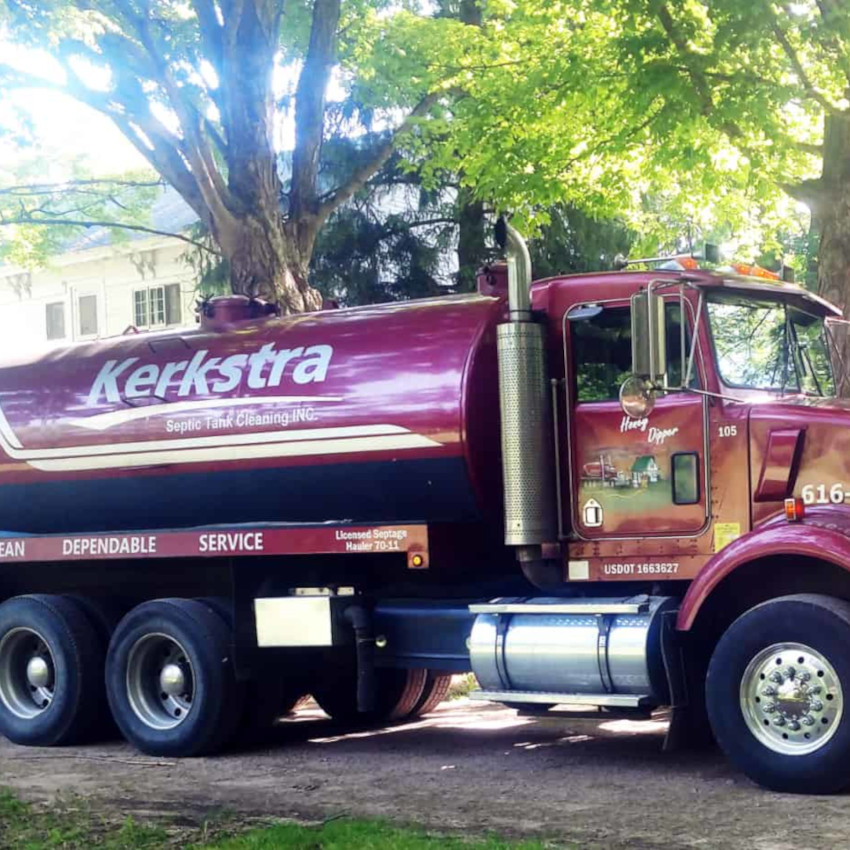
There’s almost nothing worse for a homeowner than a septic field failure. Sewage can back up into the shower or bubble up in the yard creating an odor your neighbors can smell. Fortunately, regular septic tank pumping by a dependable servicer like Kerkstra can easily prevent these issues.
Slowness in your drains, bad smells or gurgling noises can be early indicators of a septic tank failure. It could be that a line is beginning to clog, your drainfield is failing, there is excessive solid buildup in your septic tank, or your lift pump is failing. Diagnosing and treating these issues is difficult and even dangerous work for an amateur—more than one enthusiastic homeowner has been overcome by methane gases attempting to fix their septic system.
It’s best to have any problem checked immediately by a professional to prevent further damage from occurring. Our experienced septic technicians can pump your tank, determine the cause of your problem, and recommend a solution if necessary.
Get Answers to common questions about Septic Tanks and components of your Septic System.
Our recommendation is every 2 to 3 years. If your family is larger (4+), you may want to consider having your septic tank pumped every 2 years. Water consumption for laundry, showers, and just overall usage will be more for larger families.
A septic tank is where all of your household wastewater goes and this includes your toilets, sinks, laundry, and showers. A septic tank is designed to separate solids from liquids and uses a natural bacteria to break down your wastewater. Over time, the solids build up in the bottom of your septic tank as sludge and pumping keeps this at a healthy level so it doesn’t leak into your drain field.
Homeowners with Septic Tanks normally also have a drain field. Drain fields are a network of underground perforated pipes in gravel filled trenches which naturally treats & filters the wastewater (often referred to as effluent) back into the natural environment. These systems have been around since the 1860s and became prevalent in the United States in the 1940s.

Owners should know the location of their Septic Tank or Septic Tanks. Most of the time, if you can find your primary sewer drain in the lower level of your home, all of your plumbing will eventually drain to this location and your septic tank is likely somewhere just outside the foundation wall.
Septic Tank pumping is easier if your lid is exposed or attached to a riser. If your lid is buried, this will require someone to dig out the lid in order to pump it.
The majority of Septic Tanks in Michigan will be 1,000 or 1,500 gallons. If you are unsure, our team will be able to easily determine the size of your tank.